Artificial Intelligence for Brain–Computer Interface

November 30 - December 1, 2026 · Manchester, United Kingdom

AI4BCI is the first international symposium dedicated to artificial intelligence for brain–computer interfaces — uniting machine learning, neural engineering, and human-centred translation under one programme.

Conference
Artificial Intelligence for Brain–Computer Interface
Dates
November 30 - December 1, 2026
Location
Manchester, United Kingdom

About

From signal to intent — together, in one room.

A new venue for AI × BCI

Brain–computer interfaces are increasingly moving beyond controlled laboratory settings. Foundation models are opening new questions about what can be shared, adapted, and learned from neural activity. Privacy-preserving machine learning is becoming an essential part of working responsibly with highly sensitive neural data.

AI for BCI 2026 is a single-track conference with a focused mandate: to publish and discuss the most rigorous work at the intersection of artificial intelligence and brain–computer interfaces — invasive and non-invasive, motor and cognitive, clinical and consumer.

We welcome contributions from machine learning, computational neuroscience, neural engineering, human–computer interaction, clinical neuroscience, and the social sciences of neurotechnology.

AI4BCI is committed to creating an inclusive, welcoming and respectful environment.


Keynote speakers

Keynotes & invited talks

Confirmed keynote speakers for AI4BCI 2026 are listed below. Talk titles and further programme details will be announced soon.

Prof. Damien Coyle

Prof. Damien Coyle

Professor

University of Bath Ulster University

Show bio

Damien Coyle is Professor of Neurotechnology, UKRI Turing AI Acceleration Fellow, and Director of the Bath Institute for the Augmented Human at the University of Bath, and Professor of Neurotechnology at Ulster University. His research develops advanced artificial intelligence methods for decoding electrophysiological signals and translating them into reliable control signals for brain-computer interface (BCI) systems. His work emphasises scalable clinical translation, including multi-site trials and real-world deployment with patient populations such as spinal cord injury, stroke, disorders of consciousness, Locked-In Syndrome and post-traumatic stress disorder. He is Founder and CEO of NeuroCONCISE Ltd, an award-winning company developing AI-enabled wearable neurotechnology platforms.


Prof. Riccardo Poli

Prof. Riccardo Poli

Professor

University of Essex

Show bio

Prof. Riccardo Poli is with the School of Computer Science and Electronic Engineering at the University of Essex, where he has been a full professor of Computer Science since 2001. A biomedical engineer by training, he holds a 6-year MEng in Biomedical Engineering from the University of Florence (summa cum laude) and earned a distinguished dissertation award for his PhD work on the computer vision of medical images using AI and Neural Networks. Following a Postdoctoral Research Fellowship with the National Research Council, he joined the University of Birmingham as a Lecturer in AI and subsequently became a Reader in Evolutionary and Emergent Behaviour Intelligence and Computation (1994-2001). At Essex, he co-founded the Brain Computer Interfaces and Neural Engineering Lab in 2003, which he co-directed for a number of years. Bringing over 38 years of experience in Symbolic AI and 35 years in Neural Networks to his research, and 33 years of Evolutionary Computation and Genetic Programming, and 23 years of Neural Engineering and BCI. Prof. Poli has co-authored over 500 articles and 2 books, accumulating more than 34,000 Scholar citations. He was an associate editor (and now is on the advisory board) of Evolutionary Computation (MIT Press), an associate editor of Genetic Programming and Evolvable Machines (Kluwer), Applied Soft Computing, and Swarm Intelligence, and is still an associate editor for Frontiers in Neuroergonomics. Interestingly, prior to finding his ultimate vocation in scientific research, he spent a decade playing in rock and blues bands.

Prof. Tom Carlson

Prof. Tom Carlson

Professor

University College London (UCL)

Show bio

Professor Tom Carlson is Professor of Assistive Robotics at University College London (UCL), Vice-Dean (Education) for the Faculty of Medical Sciences, and Head of Education for the Division of Surgery and Interventional Science. Based in Aspire CREATe, UCL's Centre for Rehabilitation Engineering and Assistive Technology, his research focuses on assistive robotics, shared control, and advanced human-machine interfaces that enhance independence for people with disabilities. A Senior Fellow of the Higher Education Academy (SFHEA) and co-Director of the MSc in Rehabilitation Engineering and Assistive Technologies, he obtained his MEng in Electrical and Electronic Engineering and PhD in Intelligent Robotics from Imperial College London before undertaking postdoctoral research at EPFL, Switzerland. Since joining UCL in 2013, he has contributed to major European research programmes in smart wheelchairs and brain-machine interfaces, including CROWDBOT, ADAPT, TOBI, NCCR Robotics, and the INRIA-associated ISI4NAVE collaboration. He is a founding member of the IEEE Systems, Man, and Cybernetics Society Technical Committee on Shared Control.

Prof. Aleksandra Vuckovic

Prof. Aleksandra Vuckovic

Professor

University of Glasgow

Show bio

Aleksandra Vuckovic holds an MEng in Engineering Physics and an MSc in Control Systems from the University of Belgrade. She received her Ph.D. from the Centre for Sensory-Motor Interaction, Aalborg University, Denmark in 2004, where she has also served as PostDoc. Between 2005 and 2007 she worked as a senior research officer at the Brain-Computer Interface Group, Department of Computer Science, University of Essex. Since 2008 she has been with the James Watt School of Engineering, University of Glasgow. Aleksandra is interested in Brain-Computer Interface (BCI) as a new form of non-muscular channel for communication between patients and their environment, which compensates a loss of sensory-motor functions or alternatively provides strengthening or modulation of preserved neuro-muscular pathways in patients with impairments of the Central Nervous System. She is in particular interested in developing and implementing patient-managed Brain-Computer Interface systems for home-based neurorehabilitation. Further areas of interest are improvements of existing rehabilitation therapies combining Brain-Computer Interface and Functional Electrical Stimulation and exploring a correlation between the recovery and changes in the brain responses i.e., brain plasticity. She also applies BCI for operant conditioning training of the brain (neurofeedback) for the treatment of Central Neuropathic pain following injuries to the Spinal Cord. Her research further focuses on EEG as a neuroimaging modality to identify markers of neuropathic pain (diagnostic, predictive, and prognostic). She uses machine learning techniques to develop transferable individualized markers of pain to aid stratified pain prevention and treatment.

Dr. Jacques Carolan

Dr. Jacques Carolan

Program Director

ARIA Precision Neurotechnologies programme

Show bio

Jacques Carolan is a founding Programme Director at ARIA and Honorary Associate Professor at UCL. He is an applied physicist by training, having spent 10 years developing photonic technologies to accelerate quantum and classical computing, initially at MIT and then at the Niels Bohr Institute. He then pivoted into systems neuroscience, where he developed optical technologies for high-speed, large-scale interrogation of neural circuits in vivo at UCL. At ARIA he leads the Precision Neurotechnologies programme, which is developing next-generation circuit-level tools to help understand and repair the human brain. He completed his PhD at the University of Bristol in 2015. He has been awarded a BBSRC Discovery Fellowship, a Marie-Sklodowska Curie Global Fellowship and attended the 66th Lindau Nobel Laureates Meeting.


Organizing committee

Committee Chairs

The organizing committee brings together chair teams across scientific leadership, program coordination, remote participation, local logistics, and the data challenge.

Chairs

4 members

Dr. Jingyuan Sun

Assistant Professor(Lecturer)

The University of Manchester

Visit profile

Dr. Serafeim Perdikis

Associate Professor (Senior Lecturer)

The University of Essex

Dr. Ian Daly

Associate Professor (Senior Lecturer)

The University of Essex

Prof. Mahnaz Arvaneh

Professor

The University of Sheffield

Program Committee Chairs

2 members

Dr. Cunhang Fan

Professor

Anhui University

Dr. Hongpeng Zhou

Dame Kathleen Ollerenshaw Fellow

The University of Manchester

Remote Participation Chair

2 members

Dr. Ziyu Jia

Institute of Automation, Chinese Academy of Sciences

Dr. Yunhao Zhang

Institute of Automation, Chinese Academy of Sciences

Local Organizing Chair

1 member

Dr. Zhenhong Li

Assistant Professor (Lecturer)

The University of Manchester

Data Challenge Chairs

2 members

Dr. Jixing Li

Assistant Professor

Hongkong City University

Dr. Shaonan Wang

Assistant Professor

Hongkong Polytechnic University


Call for submissions

We invite original research that advances the science or engineering of AI for brain–computer interfaces. Submissions will be reviewed by domain experts and held to the standards of leading machine-learning and neural-engineering venues. We accept up to two-page extended abstracts.

Author guidelines

Submissions should be prepared as an extended abstract of no more than two pages, including references. Authors should use the official AI4BCI LaTeX or Word template and submit a PDF version of the manuscript.

Submissions should be written in English and may describe completed work, ongoing work, preliminary results, recently published work, or work currently under review elsewhere. If the submission is based on published or concurrently submitted work, this should be clearly indicated where appropriate.

AI4BCI is a non-archival symposium. Accepted abstracts may be included in the symposium programme, booklet, or website, but will not be treated as formal archival proceedings. Submission to AI4BCI should therefore not prevent authors from submitting the work to journals or conferences.

All submissions will undergo single-blind peer review. Reviewers will assess submissions based on relevance to AI4BCI, clarity, originality, technical soundness, and potential interest to the symposium audience.

Accepted submissions will be considered for poster or oral presentation. A selected number of high-quality submissions will be invited for oral presentation, while others may be presented as posters.

Studies involving human participants must have appropriate ethics approval or exemption. Authors should ensure compliance with data protection and consent requirements.

  1. 01Neural Foundation Models

    Pretraining across subjects, sessions, devices, and modalities. Self-supervised objectives for neural time series. Transfer to new tasks with minimal calibration.

  2. 02Decoding & Encoding

    Speech, language, motor, vision, and affect decoding from EEG, ECoG, MEG, fMRI, and intracortical recordings. Brain-to-text, brain-to-image, brain-to-action.

  3. 03Multimodal & Embodied BCI

    Fusing neural signals with eye tracking, EMG, IMU, audio, and video. Closed-loop systems, neuroprostheses, and human–robot interaction.

  4. 04Privacy, Safety & Neuroethics

    Federated and on-device learning, differential privacy for neural data, neurorights, mental privacy, and the responsible deployment of decoders.

  5. 05Clinical Translation

    Restoring communication and movement, rehabilitation, neurodegenerative disease, depression and chronic pain. Trial design, validation, and real-world evidence.

  6. 06Datasets, Benchmarks & Reproducibility

    Large-scale neural datasets, evaluation protocols, leakage and confound audits, and tooling that makes BCI research reproducible.


Important dates

All deadlines are 11:59 PM Anywhere on Earth (AoE) unless stated otherwise.

  • Abstract & poster submission deadlineSep 21, 2026Monday · up to 2-page extended abstract
  • Review periodSep 21 – Oct 12, 20263 weeks · 1–2 reviewers per submission
  • PC decisionsOct 13 – 20, 20268 days
  • Notification of acceptanceOct 21, 2026Wednesday
  • Conference datesNov 30 - Dec 1, 2026Manchester, UK

Venue

Manchester, United Kingdom

Where computing began, where neural computing is going.

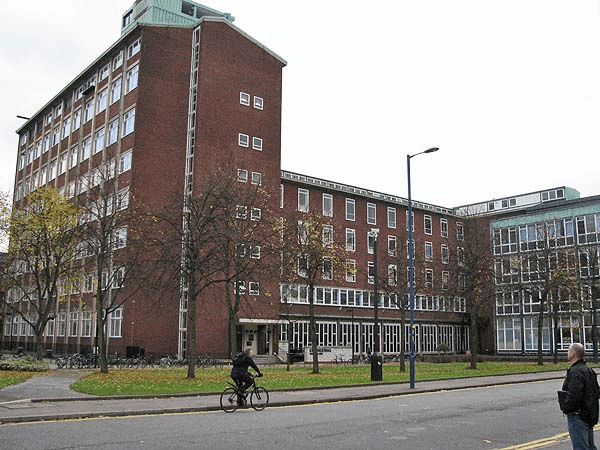
AI for BCI 2026 will be held at the Simon Building, the University of Manchester (Brunswick St, Manchester M13 9PS, United Kingdom) — a city with a long history of computing, from the Manchester Baby in 1948 to today.

Manchester is a thirty-minute flight or two-hour train ride from London, and is served by an international airport with direct flights from across Europe, North America, and Asia.

University of Manchester
Simon Building, University of Manchester
Venue
Simon Building, The University of Manchester
Brunswick St, Manchester M13 9PS, United Kingdom
Format
In-person, single track, 2 days

Registration

Registration

Registration fees are listed below. The registration site will open at the end of July.

CategoryEarly birdRegular
Student£20£25
Non-student£30£35

Registration does not include lunch. Buffet lunch can be added for £11 per meal.


Sponsors

ANT Neuro logoNeuroCONCISE logo

Become a sponsor

AI for BCI 2026 partners with companies, foundations, and research institutes that share our commitment to the responsible advancement of brain–computer interfaces.

Become a sponsor. Contact the sponsorship chair → sponsors@ai4bci.com