Artificial Intelligence for Brain–Computer Interface

November 30 - December 1, 2026 · Manchester, United Kingdom

AI4BCI is the first international symposium dedicated to artificial intelligence for brain–computer interfaces — uniting machine learning, neural engineering, and human-centred translation under one programme.

Conference
Artificial Intelligence for Brain–Computer Interface
Dates
November 30 - December 1, 2026
Location
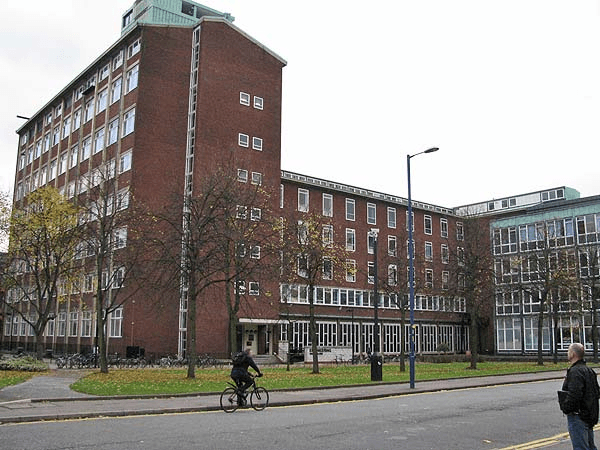
Department of Computer Science, The University of Manchester
Kilburn Building, Oxford Road, Manchester M13 9PL, United Kingdom

About

From signal to intent — together, in one room.

A new venue for AI × BCI

Brain–computer interfaces are increasingly moving beyond controlled laboratory settings. Foundation models are opening new questions about what can be shared, adapted, and learned from neural activity. Privacy-preserving machine learning is becoming an essential part of working responsibly with highly sensitive neural data.

AI for BCI 2026 is a single-track conference with a focused mandate: to publish and discuss the most rigorous work at the intersection of artificial intelligence and brain–computer interfaces — invasive and non-invasive, motor and cognitive, clinical and consumer.

We welcome contributions from machine learning, computational neuroscience, neural engineering, human–computer interaction, clinical neuroscience, and the social sciences of neurotechnology.

AI4BCI is committed to creating an inclusive, welcoming and respectful environment.


Keynote speakers

Keynotes & invited talks

Confirmed keynote speakers for AI4BCI 2026 are listed below. Talk titles and further programme details will be announced soon.

Prof. Damien Coyle

Prof. Damien Coyle

Professor

University of Bath Ulster University

Show bio

Damien Coyle is Professor of Neurotechnology, UKRI Turing AI Acceleration Fellow, and Director of the Bath Institute for the Augmented Human at the University of Bath, and Professor of Neurotechnology at Ulster University. His research develops advanced artificial intelligence methods for decoding electrophysiological signals and translating them into reliable control signals for brain-computer interface (BCI) systems. His work emphasises scalable clinical translation, including multi-site trials and real-world deployment with patient populations such as spinal cord injury, stroke, disorders of consciousness, Locked-In Syndrome and post-traumatic stress disorder. He is Founder and CEO of NeuroCONCISE Ltd, an award-winning company developing AI-enabled wearable neurotechnology platforms.

Prof. Riccardo Poli

Prof. Riccardo Poli

Professor

University of Essex

Show bio

Prof. Riccardo Poli is with the School of Computer Science and Electronic Engineering at the University of Essex, where he has been a full professor of Computer Science since 2001. A biomedical engineer by training, he holds a 6-year MEng in Biomedical Engineering from the University of Florence (summa cum laude) and earned a distinguished dissertation award for his PhD work on the computer vision of medical images using AI and Neural Networks. Following a Postdoctoral Research Fellowship with the National Research Council, he joined the University of Birmingham as a Lecturer in AI and subsequently became a Reader in Evolutionary and Emergent Behaviour Intelligence and Computation (1994-2001). At Essex, he co-founded the Brain Computer Interfaces and Neural Engineering Lab in 2003, which he co-directed for a number of years. Bringing over 38 years of experience in Symbolic AI and 35 years in Neural Networks to his research, and 33 years of Evolutionary Computation and Genetic Programming, and 23 years of Neural Engineering and BCI. Prof. Poli has co-authored over 500 articles and 2 books, accumulating more than 34,000 Scholar citations. He was an associate editor (and now is on the advisory board) of Evolutionary Computation (MIT Press), an associate editor of Genetic Programming and Evolvable Machines (Kluwer), Applied Soft Computing, and Swarm Intelligence, and is still an associate editor for Frontiers in Neuroergonomics. Interestingly, prior to finding his ultimate vocation in scientific research, he spent a decade playing in rock and blues bands.

Prof. Tom Carlson

Prof. Tom Carlson

Professor

University College London (UCL)

Show bio

Professor Tom Carlson is Professor of Assistive Robotics at University College London (UCL), Vice-Dean (Education) for the Faculty of Medical Sciences, and Head of Education for the Division of Surgery and Interventional Science. Based in Aspire CREATe, UCL's Centre for Rehabilitation Engineering and Assistive Technology, his research focuses on assistive robotics, shared control, and advanced human-machine interfaces that enhance independence for people with disabilities. A Senior Fellow of the Higher Education Academy (SFHEA) and co-Director of the MSc in Rehabilitation Engineering and Assistive Technologies, he obtained his MEng in Electrical and Electronic Engineering and PhD in Intelligent Robotics from Imperial College London before undertaking postdoctoral research at EPFL, Switzerland. Since joining UCL in 2013, he has contributed to major European research programmes in smart wheelchairs and brain-machine interfaces, including CROWDBOT, ADAPT, TOBI, NCCR Robotics, and the INRIA-associated ISI4NAVE collaboration. He is a founding member of the IEEE Systems, Man, and Cybernetics Society Technical Committee on Shared Control.

Prof. Aleksandra Vuckovic

Prof. Aleksandra Vuckovic

Professor

University of Glasgow

Show bio

Aleksandra Vuckovic is a Professor of Neurotechnologies and Rehabilitation Engineering at the University of Glasgow, UK. She is also Co-Director of the Scottish Centre for Innovation in Spinal Cord Injuries and Deputy Director of the Centre for Neurotechnology at the University of Glasgow. She studied Electrical Engineering at the University of Belgrade, Serbia and holds a PhD in Healthcare Technologies from Aalborg University, Denmark. She is a Fellow of the Institution of Mechanical Engineers, UK. Her research interests are in Brain-Computer Interface (BCI), as a new form of non-muscular channel for communication between patients and their environment, which compensates for a loss of sensory-motor functions or alternatively provides strengthening or modulation of preserved neuro-muscular pathways in patients with impairments of the Central Nervous System. She is particularly interested in BCI for the treatment of chronic pain (neurofeedback) and BCI for motor rehabilitation.

Dr. Jacques Carolan

Dr. Jacques Carolan

Program Director

ARIA Precision Neurotechnologies programme

Show bio

Jacques Carolan is a founding Programme Director at ARIA and Honorary Associate Professor at UCL. He is an applied physicist by training, having spent 10 years developing photonic technologies to accelerate quantum and classical computing, initially at MIT and then at the Niels Bohr Institute. He then pivoted into systems neuroscience, where he developed optical technologies for high-speed, large-scale interrogation of neural circuits in vivo at UCL. At ARIA he leads the Precision Neurotechnologies programme, which is developing next-generation circuit-level tools to help understand and repair the human brain. He completed his PhD at the University of Bristol in 2015. He has been awarded a BBSRC Discovery Fellowship, a Marie-Sklodowska Curie Global Fellowship and attended the 66th Lindau Nobel Laureates Meeting.

Prof. Mahnaz Arvaneh

Prof. Mahnaz Arvaneh

Professor

University of Sheffield

Show bio

Mahnaz Arvaneh is a Professor in the School of Electrical and Electronic Engineering at the University of Sheffield, where she directs the Physiological Signals and Systems Laboratory. Her research combines artificial intelligence, neural engineering and physiological signal processing to develop brain-computer interfaces (BCIs) for healthcare and human-AI collaboration. Her work explores transfer learning, generative AI and personalised neural decoding, addressing challenges in EEG variability, limited training data and reliable performance beyond the laboratory. She leads the ARIA-funded Neurotech4All project, which investigates inequalities in neurotechnology access and adoption and develops approaches to more inclusive design. Her contributions to responsible neurotechnology include the Royal Society's iHuman report, the Nuffield Council on Bioethics' work on BCI ethics, and participation in the British Standards Institution's BCI working group. She also serves as an Associate Editor for IEEE Transactions on Biomedical Engineering and IEEE Transactions on Neural Systems and Rehabilitation Engineering.


30 November – 1 December 2026

Program

Day 1

30 November 2026

  1. Registration
  2. Opening Remarks

    Kilburn 2.19

  3. Keynote: Riccardo PoliAI4BCI: Turing’s Uncharted Third WayKilburn 2.19

    Abstract

    In this talk, I will first present a brief history of AI, focusing on the three main approaches originally proposed by Alan Turing and tracing how their popularity has varied over the last 75 years. The first approach—symbolic logic and expert systems—is perhaps the least suited for Brain-Computer Interfaces (BCI). In contrast, the second approach, machine learning, has been the dominant form of AI used in BCIs for decades. Turing’s third way to achieve machine intelligence—evolution—has been hugely successful in other domains, yielding numerous machine discoveries and human-competitive results. Yet, it remains virtually untapped in the field of BCI. I will review past successes using this evolutionary approach and highlight the immense promise that charting Turing’s third way holds for the future of BCI.

  4. Coffee Break & Poster

    Kilburn Atlas and Mercury

  5. Oral Session 1 Kilburn 2.19
  6. Lunch Break

    Kilburn Atlas and Mercury

  7. Keynote: Tom CarlsonOpportunities for AI in Shared Control BCI SystemsKilburn 2.19

    Abstract

    Brain-computer interfaces (BCIs) offer an alternative interaction mode that bypasses motor output pathways to offer new opportunities for people with severe motor disabilities to regain independence. However, despite recent advances in neural decoding, non-invasive BCIs are still constrained by low information transfer rates, non-stationary signals and lengthy user training requirements, with substantial variability both within and between individuals. These challenges reinforce the need for intelligent systems that can effectively complement, rather than replace, human control, and AI is opening up new possibilities in this field.

    This keynote will discuss how shared control techniques that leverage context information can enable brain-controlled assistive technologies to operate in less-constrained settings. Building upon advances in assistive robotics, adaptive autonomy, and human-centred BCI design, I will discuss how AI may further help to compensate for uncertainty, personalise assistance to a user's evolving capabilities, and enable a more equitable collaboration between human and machine. In particular, I will be exploring dynamic shared-control policies, robust machine learning methods for reducing (re-)calibration time, and the use of physiological and contextual information to estimate the user’s state and intent.

    The talk will also address a persistent bottleneck: the process of learning to use a BCI. I will examine how shared control and virtual reality techniques can help accelerate skill acquisition and development. This is achieved by improving engagement and supporting longer-term adaptation, both for the users and the intelligent assistive systems. Together, advances in these areas are paving the way towards a new generation of AI-enabled BCIs that are not only more capable and reliable, but are also more personalised and empowering.

  8. Coffee Break & Poster

    Kilburn Atlas and Mercury

  9. Keynote: Mahnaz ArvanehUsing AI to Move Neurotechnology Out of the LabKilburn 2.19

    Abstract

    A brain–computer interface (BCI) that works in the lab must still contend with a basic challenge in everyday use: brain signals vary between people and from one session to the next. For someone using a BCI for stroke rehabilitation at home, that variability can mean spending part of each session recalibrating the system before therapy can begin. In this keynote, I will explore how AI can help neurotechnology adapt to individuals and remain reliable across sessions. I will use TeleRegain, a home-based stroke rehabilitation system that detects movement attempts from brain signals and triggers muscle stimulation, to illustrate what it takes to bring a closed-loop BCI into the home. Drawing on work in transfer learning, generative AI and personalised brain stimulation, I will discuss how we can make better use of existing data, reduce calibration time and tailor interventions to individuals. I will also draw on Neurotech4All to examine who can access neurotechnology and how working with patients and communities can shape its design. The aim is to develop systems that work reliably in the settings where people need them and fit into their daily lives.

  10. Industry Session 1

Day 2

1 December 2026

  1. Registration
  2. Opening of Second Day

    Kilburn 2.19

  3. Keynote: Damien CoyleAI for Wearable Brain–Computer Interfaces: Are We Ready to Scale?Kilburn 2.19

    Abstract

    Recent advances in artificial intelligence (AI), wearable neurotechnology, and brain–computer interfaces (BCIs) are creating new opportunities to translate laboratory demonstrations into practical, real-world applications. However, despite considerable progress in neural decoding, significant challenges remain in developing systems that are robust, generalisable, accessible, and capable of operating reliably outside controlled laboratory environments.

    This keynote will explore the evolving role of AI in BCIs, examining both recent advances and the limitations that continue to constrain their scalability. Drawing on research spanning wearable EEG, adaptive neural decoding, motor imagery, virtual reality, and closed-loop neurofeedback, the talk will consider how AI can support more personalised and effective human–machine interaction. Examples from experimental and clinical studies will include BCIs for people with disorders of consciousness, early investigations into Baby BCIs to study emerging sensorimotor capabilities in infants, and approaches to making BCI control as reliable and intuitive as natural muscle-based interaction. The latter will consider the concept of negotiated equilibrium between biological and artificial control systems, including the role of adaptive AI, feedback, and learning in establishing effective human–machine cooperation.

    The talk will also introduce emerging research directions supported by major collaborative initiatives, including the EIC-funded CEREBRIS programme and the EPSRC International Centre-to-Centre programme. These initiatives bring together interdisciplinary expertise to advance AI-enabled neurotechnology, neurorehabilitation, and the translation of BCIs into practical applications across different populations and environments.

    Ultimately, the keynote will examine what is required to move beyond small, highly controlled studies towards longitudinal, large-scale, and real-world deployment, asking whether advances in AI and wearable neurotechnology are bringing us closer to BCIs that can operate reliably at scale.


  4. Coffee Break & Poster

    Kilburn Atlas and Mercury

  5. Keynote: Aleksandra VuckovicMotor Imagery Beyond BCI: From Rehabilitation to Clinical AssessmentKilburn 2.19

    Abstract

    Motor imagery (MI) is widely used as a paradigm in brain–computer interfaces (BCIs), particularly for restoring or supporting motor function through neurorehabilitation. Using MI-based BCIs in people with spinal cord injury (SCI) as an example, this lecture will explore how the stage of injury and the presence of chronic neuropathic pain influence cortical lateralisation, event-related desynchronisation (ERD), and, consequently, BCI performance.

    Moving beyond its established role in rehabilitation, I will demonstrate how cue-based MI paradigms can also provide a framework for identifying potential diagnostic and prognostic EEG markers of neuropathic pain. I will discuss the challenges of translating these markers into clinically meaningful tools, with particular emphasis on their generalisability, robustness, and reliability across individuals, sessions, and stages of injury.

  6. Lunch Break

    Kilburn Atlas and Mercury

  7. Keynote: Jacques Carolan

    Kilburn 2.19

  8. Oral Session 2 Kilburn 2.19
  9. Coffee Break & Poster

    Kilburn Atlas and Mercury

  10. Industry Session 2
  11. Closing Remarks

    Kilburn 2.19


Oral Sessions

Oral Session 1

Day 1 · 30 November 2026

11:05 – 12:20

  1. 11:05 – 11:20

    Multi-instance SVMs for EEG Motor Imagery Classification

    Alexander Thomas, Pablo Islas, Tom Carlson

  2. 11:20 – 11:35

    Keeping EEG on the Device Is Not Keeping It Private: Sender Linkage in Federated EEG Fine-Tuning

    George Ford, Jingyuan Sun

  3. 11:35 – 11:50

    Toward Trustworthy Riemannian BCI: Interpreting and Stress-Testing Model Sensitivity

    Florian Yger, Thibault de Surrel, Marie-Constance Corsi, Fabien Lotte

  4. 11:50 – 12:05

    Zero-shot calibration of an action-word BCI: transfer and confound audit

    Hernán Villota, Jaime A. Riascos-Salas

  5. 12:05 – 12:20

    An Evidence-Aware Framework for EEG Microstate Analysis: Improved Sensitivity to Alzheimer’s Disease and Ageing

    Kaidong Wu, Haili Ye

Oral Session 2

Day 2 · 1 December 2026

14:30 – 15:45

  1. 14:30 – 14:45

    EEG Set Transformer: A Feasibility Study in Cross-Dataset Motor Imagery Classification

    Simon Kojima, Fabien Lotte

  2. 14:45 – 15:00

    Affective Conditioning of a Variational Autoencoder for Brain-based Music-Based Interventions

    Lianne Sánchez-Rodríguez, Piotr Nabrzyski, Jose L Contreras-Vidal

  3. 15:00 – 15:15

    Paradigm-Agnostic EEG Data Augmentation via Conditional Wasserstein GAN with Gradient Penalty

    Sourojit Goswami, Sean Anderson, Mahnaz Arvaneh

  4. 15:15 – 15:30

    Complementary Decision Patterns of xDAWN and EEGNet for Single-Trial ERP Classification

    Mian Kou, Daniel Blackburn, Mahnaz Arvaneh

  5. 15:30 – 15:45

    Bounded integration and hybrid coding in a spike-converted language model

    Yang Cui


AI4BCI 2026 · 30 November – 1 December

All Accepted Abstracts and Poster ID

33 accepted abstracts. The number next to each title is its poster ID.

Poster information

All accepted abstracts that have not been selected for an oral presentation will be presented as posters. Authors selected for oral presentations are also welcome and encouraged to bring a poster to showcase their work.

The poster sessions will take place during the coffee breaks. There will be two combined coffee break and poster sessions each day, giving four poster sessions across the two-day symposium.

Posters will not be assigned to individual sessions. All posters will be displayed throughout both days of the symposium, providing multiple opportunities for discussion with attendees.

You can put up your poster immediately after checking in at the registration desk upon arrival.

Your poster number corresponds to the number of your abstract in the accepted abstracts list on our official website. Please check this number in advance and use the corresponding poster board.

Accepted abstracts

Poster IDs #1–#33
  1. #1

    Brain–Computer Interfaces: From static to adaptive in real-world deployment

    Fawad Jamshed

  2. #2

    Does an EEG Foundation Model Decode Dynamics or Sensor Identity?

    Saanvi Skanda Subramanian

  3. #3

    What Drives Seizure Localization with EEG Foundation Models: Temporal Structure or Sensor Identity?

    Saanvi Skanda Subramanian

  4. #4

    A Unified Transformer Architecture for Multi-Paradigm EEG Decoding

    Woosung Choi, Hong Gi Yeom

  5. #5

    EEG Bias and Inclusivity: How Hair Texture and Racial Disparities Undermine Equitable Neurotechnology, and Innovations Correcting Course

    Saanjh Balpande

  6. #6

    Calibrated Brain-Behavior Reading for BCI: Encoding, Decoding, and the Dual-Use Boundary

    Aayush Gandhi

  7. #7

    Toward Trustworthy Riemannian BCI: Interpreting and Stress-Testing Model Sensitivity

    Florian Yger, Thibault de Surrel, Marie-Constance Corsi, Fabien Lotte

  8. #8

    Deep Learning-Based Four-Class Motor Imagery EEG Decoding

    Sandeep Kumar Sood

  9. #9

    EEG-Based Stress Detection Using Bidirectional LSTM for Brain-Computer Interfaces

    Munish Bhatia, Sandeep Kumar Sood

  10. #10

    Graph Signal Processing of Frequency-Specific Structure–Function Coupling for ADHD Classification

    Haili Ye

  11. #11

    fNIRS-Driven Explainable AI for Robust Mental Fatigue Classification in Human-Robot Collaboration

    Boutheina ABDELHAK

  12. #12

    What Do sEEG Speech Decoders Recover? Continuous vs. Discrete Codec Targets Under Matched Floors and Ceilings

    Saim Chishti

  13. #13

    EEG Set Transformer: A Feasibility Study in Cross-Dataset Motor Imagery Classification

    Simon Kojima, Fabien Lotte

  14. #14

    Contextual representations support language-model–brain alignment: evidence from graded interventions

    Yang Cui

  15. #15

    Bounded integration and hybrid coding in a spike-converted language model

    Yang Cui

  16. #16

    NeurDuo-EEG: Persistent State and Explicit Memory for Continuous EEG

    Yifan Wang

  17. #17

    Lightweight EEG Denoising with Reservoir Computing

    Alex Pepi, Simon Kojima, Xavier Hinaut, Fabien Lotte

  18. #18

    Paradigm-Agnostic EEG Data Augmentation via Conditional Wasserstein GAN with Gradient Penalty

    Sourojit Goswami, Sean Anderson, Mahnaz Arvaneh

  19. #19

    Zero-shot calibration of an action-word BCI: transfer and confound audit

    Hernán Villota, Jaime A. Riascos-Salas

  20. #20

    Quantum-Gated LSTM-Style Classifier for EEG Seizure-State Decoding: A Comparative Evaluation under Synthetic Noise

    Keshav Singh Rawat

  21. #21

    Keeping EEG on the Device Is Not Keeping It Private: Sender Linkage in Federated EEG Fine-Tuning

    George Ford, Jingyuan Sun

  22. #22

    Multi-instance SVMs for EEG Motor Imagery Classification

    Alexander Thomas, Pablo Islas, Tom Carlson

  23. #23

    Complementary Decision Patterns of xDAWN and EEGNet for Single-Trial ERP Classification

    Mian Kou, Daniel Blackburn, Mahnaz Arvaneh

  24. #24

    Exploring the Contribution of Median Nerve Stimulation to EEG-Based Mental Workload Decoding: A Pilot Study

    Pierre-Baptiste Mathieu de Carvalho, Fabien Lotte, Sébastien RIMBERT

  25. #25

    An Evidence-Aware Framework for EEG Microstate Analysis: Improved Sensitivity to Alzheimer’s Disease and Ageing

    Kaidong Wu, Haili Ye

  26. #26

    Affective Conditioning of a Variational Autoencoder for Brain-based Music-Based Interventions

    Lianne Sánchez-Rodríguez, Piotr Nabrzyski, Jose L Contreras-Vidal

  27. #27

    Disentangling Neural Identity from Encoder Identity in a Privacy Audit of BP-GPT's fMRI-to-Text Decoding

    Rishabh Yadav, Saketh Chebrolu, Joshua Seluzhitskiy, Nolan Christopher Horvath

  28. #28

    Artifact-Aware EEG Processing for Participant-Independent Motor-Imagery Decoding

    Samarth Gaggar, Ridhima Kapoor, Anirudh Nanniyur, Yuchen Wang

  29. #29

    When Should a Speech-BCI Decoder Recalibrate? Testing Triggers Against Burden-Matched Random Maintenance

    Brownstafford Abraham

  30. #30

    An ecological auditory paradigm towards instruction-free clinical BCIs

    Nicolas Amador, Emmanuel MABY, Alexandre Mollaret, Mahnaz Arvaneh, Jérémie Mattout

  31. #31

    Recoverable Readout Mismatch in Smooth-to-Spiking EEG Decoding

    Maximilian Nicholson

  32. #32

    Do EEG Foundation Models Read the Heart? Auditing and Disentangling Cardiac Information for Multimodal Brain–Heart Prediction

    Pranjit Deka

  33. #33

    Subject- and Session-Dependent Contributions of Phase-Based Functional Connectivity to CSP for Motor Imagery EEG Classification

    S. Beyza Turkoglu, Liisa A. Kivioja, Shirley Coyle


Organizing committee

Committee Chairs

The organizing committee brings together chair teams across scientific leadership, program coordination, remote participation, local logistics, and the data challenge.

Chairs

4 members

Dr. Jingyuan Sun

Assistant Professor(Lecturer)

The University of Manchester

Visit profile

Dr. Serafeim Perdikis

Associate Professor (Senior Lecturer)

The University of Essex

Dr. Ian Daly

Associate Professor (Senior Lecturer)

The University of Essex

Prof. Mahnaz Arvaneh

Professor

The University of Sheffield

Program Committee Chairs

2 members

Dr. Cunhang Fan

Professor

Anhui University

Dr. Hongpeng Zhou

Dame Kathleen Ollerenshaw Fellow

The University of Manchester

Remote Participation Chair

2 members

Dr. Ziyu Jia

Institute of Automation, Chinese Academy of Sciences

Dr. Yunhao Zhang

Institute of Automation, Chinese Academy of Sciences

Local Organizing Chair

1 member

Dr. Zhenhong Li

Assistant Professor (Lecturer)

The University of Manchester

Data Challenge Chairs

2 members

Dr. Jixing Li

Assistant Professor

Hongkong City University

Dr. Shaonan Wang

Assistant Professor

Hongkong Polytechnic University


Call for submissions

We invite original research that advances the science or engineering of AI for brain–computer interfaces. Submissions will be reviewed by domain experts and held to the standards of leading machine-learning and neural-engineering venues. We accept up to two-page extended abstracts.

Author guidelines

Submissions should be prepared as an extended abstract of no more than two pages, including references. Authors should use the official AI4BCI LaTeX or Word template and submit a PDF version of the manuscript.

Submissions should be written in English and may describe completed work, ongoing work, preliminary results, recently published work, or work currently under review elsewhere. If the submission is based on published or concurrently submitted work, this should be clearly indicated where appropriate.

AI4BCI is a non-archival symposium. Accepted abstracts may be included in the symposium programme, booklet, or website, but will not be treated as formal archival proceedings. Submission to AI4BCI should therefore not prevent authors from submitting the work to journals or conferences.

All submissions will undergo single-blind peer review. Reviewers will assess submissions based on relevance to AI4BCI, clarity, originality, technical soundness, and potential interest to the symposium audience.

Accepted submissions will be considered for poster or oral presentation. A selected number of high-quality submissions will be invited for oral presentation, while others may be presented as posters.

Studies involving human participants must have appropriate ethics approval or exemption. Authors should ensure compliance with data protection and consent requirements.

  1. 01 — Neural Foundation Models

    Pretraining across subjects, sessions, devices, and modalities. Self-supervised objectives for neural time series. Transfer to new tasks with minimal calibration.

  2. 02 — Decoding & Encoding

    Speech, language, motor, vision, and affect decoding from EEG, ECoG, MEG, fMRI, and intracortical recordings. Brain-to-text, brain-to-image, brain-to-action.

  3. 03 — Multimodal & Embodied BCI

    Fusing neural signals with eye tracking, EMG, IMU, audio, and video. Closed-loop systems, neuroprostheses, and human–robot interaction.

  4. 04 — Privacy, Safety & Neuroethics

    Federated and on-device learning, differential privacy for neural data, neurorights, mental privacy, and the responsible deployment of decoders.

  5. 05 — Clinical Translation

    Restoring communication and movement, rehabilitation, neurodegenerative disease, depression and chronic pain. Trial design, validation, and real-world evidence.

  6. 06 — Datasets, Benchmarks & Reproducibility

    Large-scale neural datasets, evaluation protocols, leakage and confound audits, and tooling that makes BCI research reproducible.


Important dates

All deadlines are 11:59 PM Anywhere on Earth (AoE) unless stated otherwise.

  • Abstract & poster submission deadlineOct 15, 2026Thursday · up to 2-page extended abstract
  • Review periodOct 15 – 22, 20268 days · 1–2 reviewers per submission
  • PC decisionsOct 23 – 24, 20262 days
  • Notification of acceptanceOct 25, 2026Sunday
  • Conference datesNov 30 - Dec 1, 2026Manchester, UK

Venue

Manchester, United Kingdom

Where computing began, where neural computing is going.

AI for BCI 2026 will be held at Kilburn Building 2.19, the University of Manchester — a city with a long history of computing, from the Manchester Baby in 1948 to today.

Manchester is a thirty-minute flight or two-hour train ride from London, and is served by an international airport with direct flights from across Europe, North America, and Asia.

University of Manchester
University of Manchester venue
Venue
Kilburn Building 2.19
Kilburn Building, Oxford Road, Manchester M13 9PL, United Kingdom
Format
In-person, single track, 2 days

Registration

Registration

Registration is now open. Please use the link below to pay the registration fee.

AI4BCI supports both remote and in-person attendance. The registration fee is the same for both attendance modes.

Register and pay registration fee
CategoryEarly birdRegular
Student£20£30
Non-student£30£40

Registration does not include lunch. Buffet lunch can be added for £13.75 per meal.


Sponsors

ANT Neuro logoNeuroCONCISE logo
g.tec logo
Artinis & NIRx logo
Brain Products UK logo

Become a sponsor

AI for BCI 2026 partners with companies, foundations, and research institutes that share our commitment to the responsible advancement of brain–computer interfaces.

Become a sponsor. Contact the sponsorship chair → sponsors@ai4bci.com